Picking up a project mid-flight
I joined as the only UX designer remaining on the team, after the previous designer had already left. What I inherited was a set of late-stage feature flows with little context behind them — I could see what had been designed, not why. Rather than keep patching forward, I went back to the original briefing documents and rebuilt the process map myself.
Fixing the structure, not just the screens
The workflow as I found it moved in a zigzag — jumping between sections for small changes, with each stage only loosely dependent on the one before. I restructured it into horizontal bands, so the journey became genuinely linear: a user's progress depended on their previous answers, and — critically for a process this detailed — they could pause and return without losing their place.
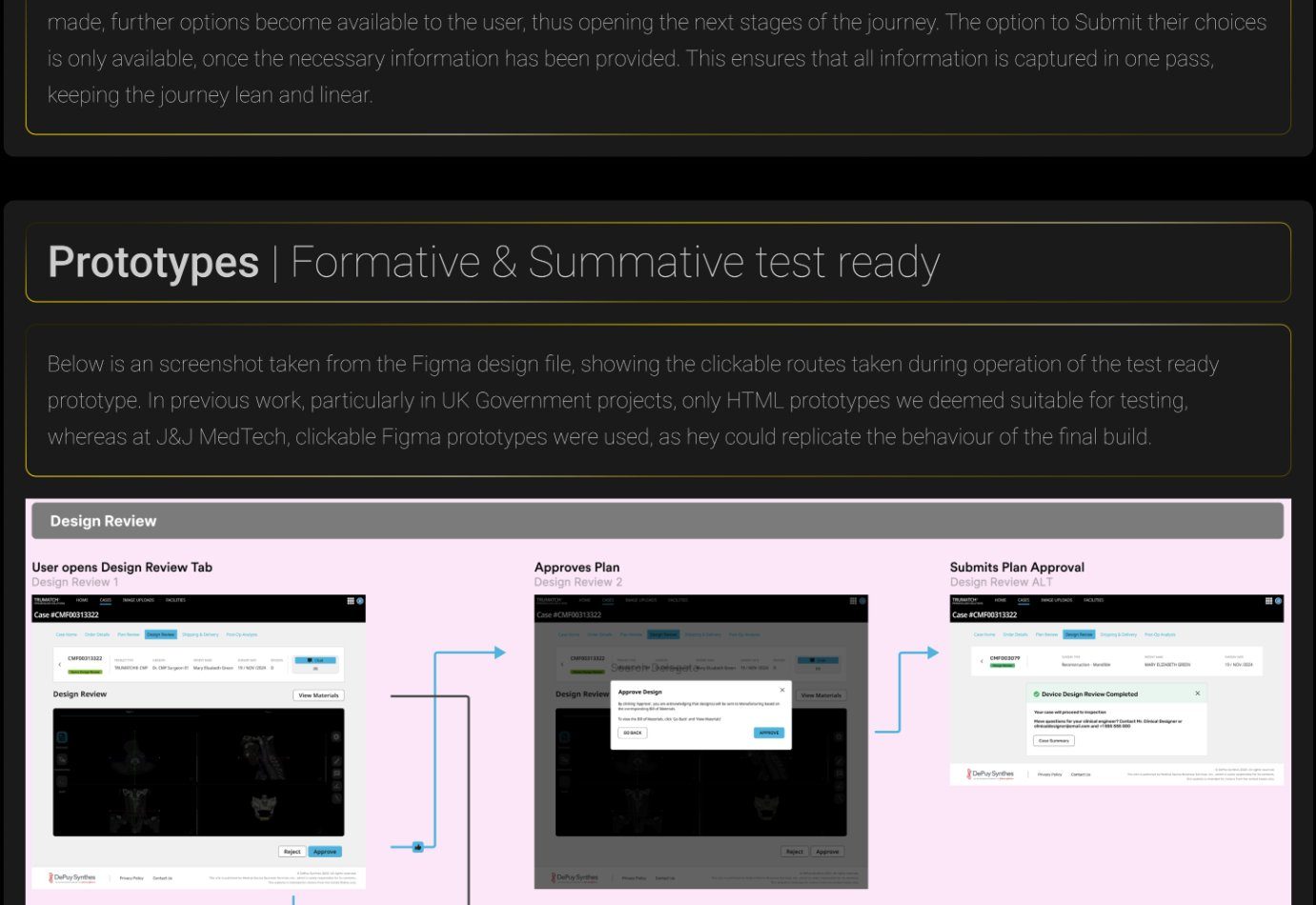
Reactive feature flow — options narrow as the surgeon's choices are made.
"I think of this service like a meal prepared by a Michelin-starred chef: the user shouldn't need to touch the ingredients or the method. What they can do is choose what suits their taste."